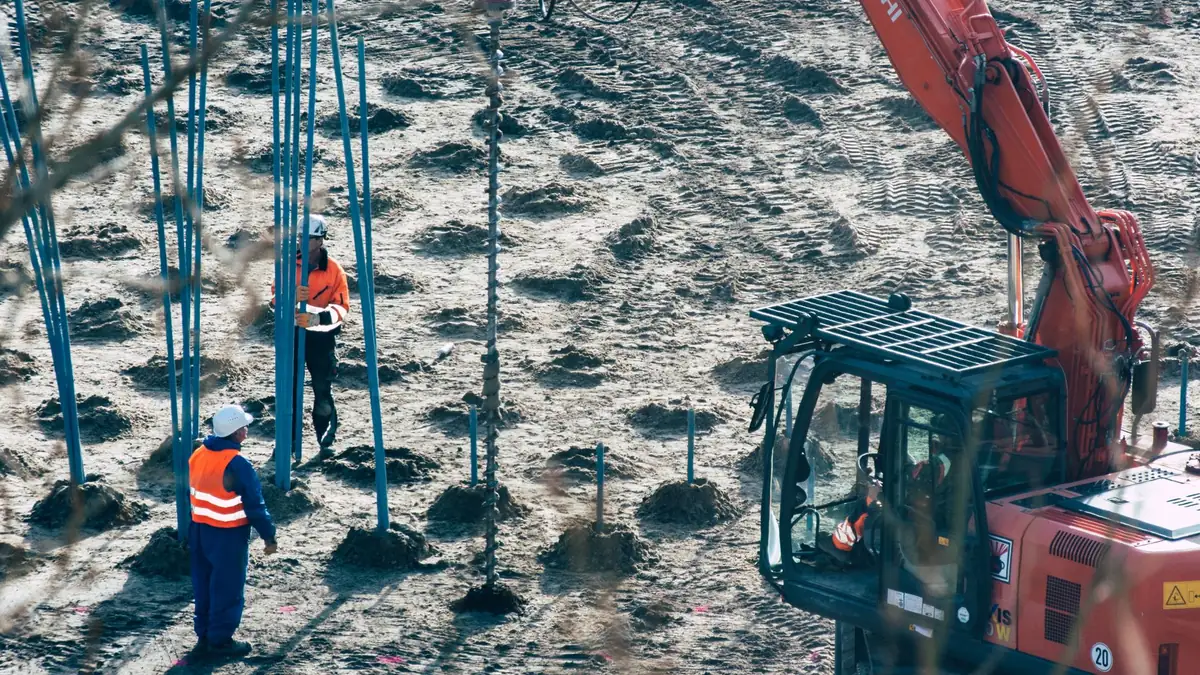
Helical Piers and Push Pier Installation in Henderson, NV
Helical piers and push piers are the deep-foundation fix for settlement that a shallow repair can't reach. Both are screwed or driven past the loose, unstable soil near the surface to reach ground that can actually hold the load — the right call when a hard caliche layer, commonly reported 5-8 feet down, sits between the surface and stable soil.
- Licensed Nevada contractor (NSCB A-9)
- Capacity verified at install on every pier
- Free on-site evaluation before recommending a pier count
Get a Free Foundation Inspection
Tell us what you need — we’ll get back to you fast.
We'll be in touch shortly.
Please call us at (702) 819-6601.
Helical Piers vs. Push Piers
Push piers (also called resistance or hydraulic piers) are driven into the ground using the weight of the structure itself, which makes them well suited to heavier homes and structures. The helical version is screwed in mechanically, with load capacity verified at the moment of installation, which makes it a common choice for lighter structures, additions, and tie-backs on retaining walls.
Both methods bypass the same problem: loose, sandy topsoil that gives way under the load a shallow footing needs, sitting above a hard caliche layer commonly reported at depths of 5-8 feet in the Las Vegas Valley. Deep piers reach through both layers to soil that can actually bear the structure's weight. Neither method is inherently better — the right one depends on the structure's weight, the settlement pattern, and what the evaluation finds underground.
Pier spacing and count aren't standardized across the valley either. A pier layout that works for a slab home in one neighborhood can be wrong for a pier-and-beam home a few streets over, since the depth to stable soil and the way the fill was compacted both shift block by block. That's the reason the evaluation happens before any number gets attached to the job, not after.
What's Included
Free evaluation
We assess settlement, structure weight, and soil conditions before recommending a pier type.
Permit handling
We file with the City of Henderson Building and Fire Safety Department where required.
Licensed underpinning work
Pier installation falls under Nevada NSCB classification A-9, Piers and Foundations.
Capacity verified at install
Pier load capacity is confirmed mechanically as each one goes in, not estimated afterward.
Our Process
How Pier Installation Works
Free On-Site Evaluation
We assess the structure's weight, the settlement pattern, and soil conditions to recommend a pier type and count.
Permit & Layout
We file with the City of Henderson Building and Fire Safety Department where required and map out pier placement around the foundation.
Install & Verify
Each pier is installed to depth with load capacity confirmed on the spot, then the foundation is re-checked before we call the job complete.
Where We Work
Pier Installation Across Henderson and the Valley
Pier depth and count vary by neighborhood as much as by home size, since how deep the caliche sits and how the fill soil was compacted both change across the valley.
Common Questions
Frequently Asked Questions
What's the difference between helical and push pier types?
Push piers are driven using the structure's own weight and suit heavier homes; the helical version is screwed in with capacity verified during installation, and suits lighter structures, additions, and tie-backs. We recommend one based on the structure and the evaluation, not a default.
How many piers does a typical foundation need?
Pier count depends on the structure's weight, the settlement pattern, and what the evaluation finds underground — there's no standard number that applies to every home. We size the layout during the free on-site evaluation and confirm it in the written estimate, not as a phone guess.
How deep do piers need to go in Henderson soil?
It varies by site, but piers commonly need to pass through a caliche layer reported 5-8 feet down in the valley to reach stable bearing soil below it. Depth is confirmed during installation, not guessed in advance.
Do I need a licensed contractor for pier installation in Nevada?
Yes. Pier and underpinning work in Nevada requires NSCB classification A-9, Piers and Foundations — a separate classification from general contracting that specifically covers piers, piles, and footings placed to prevent structural settling. Confirm any contractor's license before signing a contract for this kind of structural work.
What can cause a foundation to heave?
Expansive clay soil common in Nevada swells when wet and shrinks when dry, and that cycle is a common cause of foundation heave — a different failure mode from the settlement piers are used to correct.